
Complete Guide to Wire Strippers: Everything Professionals Need to Know
What Is a Wire Stripper?
A wire stripper is a specialized electrical hand tool designed to remove the insulation from electrical wires without damaging the conductive core. It is one of the most essential tools used by electricians, electronics technicians, industrial maintenance personnel, automotive repair specialists, and communication engineers.
Unlike ordinary cutting pliers or utility knives, a professional wire stripper features precision-machined stripping holes that correspond to specific wire sizes. This design allows users to remove insulation quickly, accurately, and safely while preserving the integrity of the conductor.
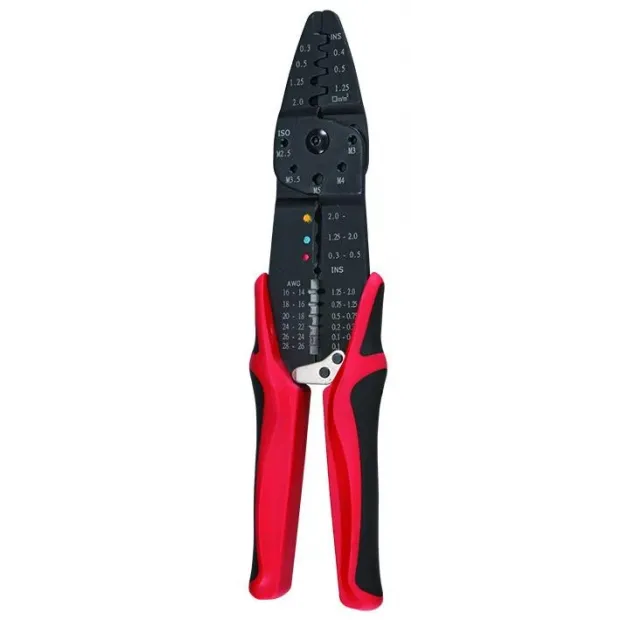
Modern professional wire strippers, such as the EAK521 10" 6-in-1 Wire Stripper, go beyond simple insulation removal by integrating multiple electrical functions into a single tool. These include wire cutting, terminal crimping, splice crimping, and screw cutting, making them indispensable for electrical installation and maintenance.
Why Is Proper Wire Stripping Important?
Correct wire preparation is the foundation of every reliable electrical connection.
Poor stripping techniques can result in:
- Damaged wire conductors
- Increased electrical resistance
- Loose terminal connections
- Overheating
- Voltage drops
- Premature equipment failure
- Reduced safety
- Higher maintenance costs
A professional wire stripper helps ensure that insulation is removed cleanly while leaving the conductor intact, resulting in stronger mechanical connections and improved electrical conductivity.
How Does a Wire Stripper Work?
A wire stripper removes insulation through a precisely sized opening.
The basic process involves:
- Selecting the correct wire size.
- Positioning the wire in the appropriate stripping hole.
- Closing the handles to grip the insulation.
- Pulling the tool along the wire.
- Removing the insulation while leaving the conductor undamaged.
When the stripping hole matches the conductor size, the insulation is cut cleanly without nicking or weakening the copper strands.
Main Types of Wire Strippers
Manual Wire Strippers
Manual wire strippers require the user to position the wire manually before stripping.
Advantages
- Simple operation
- High precision
- Lightweight
- Affordable
- Easy maintenance
- Suitable for field service
Typical Applications
- Electrical installation
- Automotive repair
- Electronics assembly
- Maintenance work
- DIY electrical projects
The EAK521 belongs to this category while adding multiple professional functions beyond wire stripping.
Automatic Wire Strippers
Automatic wire strippers automatically adjust to different wire diameters.
Advantages
- Fast operation
- Minimal manual adjustment
- High productivity
- Consistent stripping results
Best For
- High-volume production
- Assembly lines
- Manufacturing facilities
Self-Adjusting Wire Strippers
Self-adjusting models automatically detect conductor size.
Suitable for:
- Various wire diameters
- Repetitive work
- Production environments
- Electrical workshops
Multifunction Wire Strippers
Multifunction tools combine several electrical operations into one compact device.
Typical integrated functions include:
- Wire stripping
- Wire cutting
- Terminal crimping
- Screw cutting
- Bolt cutting
- Cable preparation
The EAK521 10" 6-in-1 Wire Stripper is an example of a professional multifunction electrical hand tool designed to improve efficiency while reducing the number of tools technicians need to carry.
Components of a Professional Wire Stripper
A professional wire stripper consists of several precision-engineered components.
Stripping Holes
Precisely machined openings designed for different wire sizes.
They ensure:
- Accurate insulation removal
- Consistent stripping depth
- Minimal conductor damage
Wire Cutter
The front cutting blade allows users to trim conductors before stripping or crimping.
Benefits include:
- Faster workflow
- Cleaner wire ends
- Improved installation efficiency
Terminal Crimping Dies
Professional crimping sections compress electrical terminals securely onto conductors.
The EAK521 includes:
- Non-insulated terminal crimping
- Insulated terminal crimping
- Splice terminal crimping
This allows electricians to complete multiple wiring tasks using a single tool.
Screw Cutting Holes
Integrated threaded holes enable clean cutting of machine screws while preserving thread integrity.
Supported metric sizes on the EAK521 include:
- M2.5
- M3
- M3.5
- M4
- M5
Ergonomic Handles
Professional handles improve comfort and reduce fatigue.
The EAK521 features ergonomic TPR anti-slip handles that provide:
- Comfortable grip
- Better control
- Improved safety
- Reduced hand strain
Advantages of Multifunction Wire Strippers
Compared with carrying separate electrical tools, multifunction wire strippers offer numerous advantages.
Improved Productivity
Technicians can complete several operations without switching tools, reducing installation time.
Reduced Tool Weight
One multifunction tool replaces several individual tools, making tool bags lighter and easier to carry.
Lower Equipment Costs
Purchasing one multifunction tool can reduce overall tooling expenses.
Better Workflow
Less time is spent searching for or changing tools during installation.
Increased Mobility
Field technicians benefit from carrying fewer tools while maintaining full functionality.
Why Professionals Choose the EAK521 10" 6-in-1 Wire Stripper
The EAK521 combines six essential electrical functions into one durable, compact tool:
- Precision wire stripping (0.1–2.0 mm²)
- Wire cutting
- Non-insulated terminal crimping
- Insulated terminal crimping
- Splice terminal crimping
- ISO metric screw cutting
Manufactured with SK5 high-carbon steel, a cold-rolled steel body, and an ergonomic TPR handle, it delivers professional-grade performance, long service life, and reliable operation for electricians, automotive technicians, electronics assemblers, industrial maintenance personnel, and OEM manufacturers worldwide. This content is based on the uploaded EAK521 product information.
Wire Stripper Types, Wire Standards & Professional Wire Preparation Guide
Different Types of Electrical Wires
Understanding wire types is essential for selecting the proper stripping tool and achieving reliable electrical connections.
Solid Wire
Solid wire consists of a single copper or aluminum conductor.
Characteristics
- Single conductor
- Higher rigidity
- Excellent conductivity
- Easy to terminate
- Less flexible
Typical Applications
- Residential wiring
- Commercial electrical systems
- Distribution panels
- Building electrical installations
- Switches and outlets
Professional wire strippers remove insulation cleanly without nicking the conductor, helping maintain electrical performance.
Stranded Wire
Stranded wire consists of multiple fine copper strands twisted together.
Advantages
- Excellent flexibility
- High vibration resistance
- Easy routing
- Reduced risk of conductor breakage
- Suitable for moving equipment
Common Applications
- Automotive wiring
- Industrial machinery
- Robotics
- Control panels
- Portable electrical equipment
- Marine applications
The precision stripping capability of the EAK521 helps prevent damage to delicate strands, ensuring dependable electrical performance.
Shielded Cable
Shielded cables include an additional conductive layer that protects signals from electromagnetic interference (EMI).
Common Uses
- Industrial automation
- PLC systems
- Data communication
- Audio systems
- CCTV
- Instrumentation
- Factory control equipment
Proper stripping is critical to avoid damaging the shielding layer.
Multi-Core Cable
Multi-core cables contain multiple insulated conductors inside one protective outer jacket.
Applications include:
- Control systems
- Industrial equipment
- Home appliances
- Communication systems
- HVAC equipment
- Smart buildings
Technicians often use multifunction wire strippers during cable preparation because they can strip, cut, and crimp without switching tools.
Common Electrical Wire Materials
Copper Wire
Copper remains the most widely used conductor due to its superior electrical characteristics.
Advantages include:
- High electrical conductivity
- Excellent flexibility
- Corrosion resistance
- Easy termination
- Long service life
Copper wiring is commonly used in residential, commercial, industrial, and automotive applications.
Tinned Copper Wire
Tinned copper is coated with a thin layer of tin to improve corrosion resistance.
Applications include:
- Marine equipment
- Outdoor electrical systems
- Solar installations
- Automotive wiring
- High-humidity environments
Aluminum Wire
Aluminum conductors are lighter and less expensive than copper.
Commonly used in:
- Utility power distribution
- Large electrical feeders
- Industrial power systems
Because aluminum is softer than copper, proper stripping is especially important to prevent conductor damage.
Common Wire Insulation Materials
Professional electricians regularly encounter different insulation materials, each requiring careful handling during stripping.
PVC (Polyvinyl Chloride)
PVC is one of the most common insulation materials.
Advantages:
- Low cost
- Good flexibility
- Chemical resistance
- Flame retardancy
- Easy processing
Applications:
- Residential wiring
- Appliances
- Consumer electronics
- General electrical systems
XLPE (Cross-Linked Polyethylene)
XLPE provides improved temperature resistance and electrical insulation.
Applications include:
- Industrial power cables
- Renewable energy systems
- High-voltage installations
- Underground cables
Silicone Rubber
Silicone insulation is widely used where flexibility and heat resistance are critical.
Typical applications:
- Medical equipment
- Aerospace
- Laboratory equipment
- High-temperature electronics
PTFE (Teflon)
PTFE insulation offers exceptional chemical and temperature resistance.
Applications:
- Aerospace
- Military equipment
- High-frequency electronics
- Laboratory instruments
Understanding Wire Size
Correct wire size selection is essential for safe electrical installations.
The EAK521 supports precision stripping from:
0.1 mm² to 2.0 mm²
This range covers many commonly used electrical and electronic conductors.
Typical applications include:
| Wire Size | Common Applications |
|---|---|
| 0.1 mm² | Electronic circuits |
| 0.3 mm² | Sensors |
| 0.5 mm² | Signal wiring |
| 0.75 mm² | Lighting |
| 1.0 mm² | Appliances |
| 1.25 mm² | Automotive wiring |
| 2.0 mm² | Power wiring |
Common Wire Stripping Mistakes
Improper stripping can significantly reduce electrical reliability.
Cutting the Conductor
Removing part of the copper conductor weakens the wire.
Possible consequences include:
- Reduced strength
- Increased resistance
- Heat generation
- Premature failure
Excessive Stripping Length
Removing too much insulation leaves unnecessary exposed conductor.
This may cause:
- Short circuits
- Electrical shock hazards
- Poor insulation protection
- Installation failures
Insufficient Stripping Length
Too little exposed conductor may prevent proper terminal insertion.
Results include:
- Loose terminals
- Weak electrical contact
- Increased resistance
- Equipment malfunction
Using the Wrong Tool
Utility knives or ordinary pliers often damage wire insulation or conductors.
Professional wire strippers provide:
- Accurate stripping
- Better consistency
- Increased safety
- Faster operation
Best Practices for Professional Wire Preparation
Experienced electricians follow several best practices to ensure reliable electrical connections.
Choose the Correct Stripping Hole
Always match the stripping hole to the conductor size.
Keep the Blade Sharp
Sharp cutting edges improve stripping quality and reduce conductor damage.
Inspect Every Stripped Wire
Check that:
- No copper strands are cut.
- Insulation is completely removed.
- The stripping length matches the terminal specification.
Use Proper Crimping Pressure
A correctly crimped terminal should be mechanically secure and electrically conductive without damaging the conductor.
Perform Pull Tests
After crimping, gently pull the wire to verify that the terminal is firmly attached.
Why the EAK521 Is an Ideal Professional Wire Preparation Tool
The EAK521 10" 6-in-1 Wire Stripper is engineered to simplify every stage of wire preparation—from stripping and cutting to crimping and screw cutting. Its 0.1–2.0 mm² stripping capacity, dedicated crimping sections for insulated, non-insulated, and splice terminals, plus integrated ISO metric screw cutting, make it a practical all-in-one solution for electrical professionals.
Built with SK5 high-carbon steel, a cold-rolled steel body, and an ergonomic TPR anti-slip handle, the EAK521 delivers the precision, durability, and efficiency required for residential wiring, industrial automation, automotive repair, electronics assembly, and field maintenance. This section expands on the uploaded EAK521 product information to provide additional educational value for users and search engines.
Professional Wire Crimping Technology, Screw Cutting Engineering & Electrical Connection Best Practices
What Is Terminal Crimping?
Terminal crimping is the process of mechanically compressing a metal terminal onto an electrical conductor to create a secure mechanical bond and a low-resistance electrical connection.
Unlike soldering, professional crimping creates a gas-tight connection that resists vibration, oxidation, and long-term mechanical stress. Properly executed crimps are widely accepted in industries such as automotive manufacturing, industrial automation, aerospace, telecommunications, and electrical construction.
The EAK521 10" 6-in-1 Wire Stripper integrates three dedicated crimping functions, allowing users to perform multiple terminal installations with one professional tool.
Why Proper Crimping Is Important
Poor crimping is one of the leading causes of electrical failures.
An improperly crimped terminal may result in:
- Loose electrical connections
- Increased contact resistance
- Voltage drop
- Heat generation
- Electrical arcing
- Equipment malfunction
- Premature component failure
- Increased maintenance costs
A properly crimped terminal ensures both excellent electrical conductivity and strong mechanical retention, providing reliable performance even in demanding environments.
Types of Electrical Terminals
Insulated Terminals
Insulated terminals include a plastic sleeve that protects the crimped connection from accidental short circuits and environmental exposure.
Advantages
- Enhanced electrical insulation
- Improved safety
- Reduced risk of short circuits
- Easy identification by color coding
- Suitable for general electrical installations
Common Applications
- Residential wiring
- Commercial electrical systems
- Control panels
- Home appliances
- Automotive accessories
The EAK521 supports insulated terminal crimping in:
- 0.5 mm²
- 1.25 mm²
- 2.0 mm²
Non-Insulated Terminals
Non-insulated terminals are commonly used where additional insulation or heat-shrink tubing will be applied after crimping.
Advantages
- Compact installation
- Lower profile
- Excellent conductivity
- Suitable for custom wiring
- Preferred in industrial equipment
Applications
- Industrial machinery
- Electrical cabinets
- Automotive harnesses
- Electronic equipment
- OEM manufacturing
Supported by the EAK521:
- 0.5 mm²
- 1.25 mm²
- 2.0 mm²
Splice Terminals
Splice terminals join two electrical conductors together without soldering.
Applications include:
- Wire repairs
- Cable extensions
- Maintenance work
- Electrical retrofitting
- Automotive wiring repairs
Supported sizes:
- 0.3 mm²
- 0.4 mm²
- 0.5 mm²
- 1.25 mm²
The Science Behind Reliable Crimping
Professional crimping creates what is often referred to as a cold-weld connection. During compression, the terminal barrel tightly grips the conductor strands, minimizing air gaps and reducing oxidation.
A quality crimp provides:
- Low contact resistance
- High current-carrying capability
- Excellent pull-out strength
- Stable long-term conductivity
- Resistance to vibration and mechanical stress
This is why crimped connections are preferred in many industrial and automotive applications over soldered joints.
Understanding Contact Resistance
Contact resistance is the electrical resistance at the interface between the conductor and the terminal.
Low contact resistance is essential because it:
- Improves current flow
- Reduces energy loss
- Minimizes heat generation
- Enhances system efficiency
- Extends component lifespan
Accurate wire stripping combined with proper crimping helps maintain consistently low contact resistance.
Why Pull-Out Strength Matters
Pull-out strength measures how securely a terminal is attached to a conductor.
High pull-out strength provides:
- Better vibration resistance
- Improved mechanical reliability
- Increased installation safety
- Longer service life
This characteristic is particularly important for:
- Automotive wiring
- Industrial automation
- Marine electrical systems
- Renewable energy equipment
- Heavy machinery
ISO Metric Screw Cutting Function
One unique feature of the EAK521 is its integrated ISO metric screw-cutting capability.
Supported sizes include:
- M2.5
- M3
- M3.5
- M4
- M5
Instead of using a separate cutting tool, electricians can shorten screws directly with the wire stripper while maintaining usable threads.
Benefits of Integrated Screw Cutting
Professional installers frequently need to shorten screws when mounting:
- Switch plates
- Electrical outlets
- Distribution panels
- Junction boxes
- DIN rail components
- Terminal blocks
- Control cabinets
- Electrical enclosures
Integrated screw cutting offers several advantages:
- Faster installation
- Reduced tool changes
- Preserved thread quality
- Cleaner cuts
- Improved workflow efficiency
Common Electrical Connection Problems
Understanding common connection issues helps professionals avoid failures.
Loose Crimp
Possible causes:
- Incorrect terminal size
- Insufficient crimping force
- Improper tool selection
Potential results:
- Voltage drop
- Heat buildup
- Intermittent electrical faults
Over-Crimping
Excessive force may deform the terminal or damage the conductor.
Possible consequences:
- Broken wire strands
- Reduced current capacity
- Lower mechanical strength
Incorrect Terminal Selection
Using the wrong terminal size may result in:
- Poor conductor retention
- Increased resistance
- Electrical failure
- Reduced safety
Selecting the correct terminal size and using the appropriate crimping section on the EAK521 helps ensure dependable results.
Maintenance Tips for Professional Wire Strippers
Routine maintenance extends tool life and preserves cutting performance.
Recommended practices include:
- Clean the tool after each use
- Remove dust and wire debris
- Apply light lubricant to the pivot joint
- Store in a dry environment
- Inspect cutting edges regularly
- Avoid cutting hardened steel materials beyond the tool's intended use
- Check handle condition for secure grip
- Keep the crimping dies free of contamination
Proper maintenance helps maintain consistent stripping accuracy, crimping quality, and cutting performance over years of professional service.
Why Professionals Choose the EAK521 for Electrical Connections
The EAK521 10" 6-in-1 Wire Stripper is more than a wire stripping tool—it is a complete electrical connection solution. By combining precision wire stripping (0.1–2.0 mm²), insulated and non-insulated terminal crimping, splice terminal crimping, wire cutting, and ISO metric screw cutting, it enables technicians to complete multiple stages of electrical installation with a single tool.
Its SK5 high-carbon steel construction, cold-rolled steel frame, and ergonomic TPR handle provide the durability, precision, and comfort required for professional applications in electrical installation, industrial automation, automotive repair, electronics manufacturing, telecommunications, and maintenance. This educational content expands upon the uploaded EAK521 product information to strengthen topical authority and support AI-focused SEO.
Professional Wire Stripper Safety, Maintenance, Troubleshooting & Best Practices
Safe Operation Guidelines for Wire Strippers
Although a wire stripper is considered a basic electrical hand tool, proper operation is essential for both personal safety and the quality of electrical installations.
Before beginning any electrical work, always disconnect the power source and verify that the circuit is de-energized using appropriate testing equipment.
Basic Safety Recommendations
- Disconnect electrical power before working.
- Wear appropriate personal protective equipment (PPE).
- Use safety glasses when cutting wire or screws.
- Keep fingers clear of cutting edges.
- Inspect the tool before each use.
- Replace damaged tools immediately.
- Keep the work area clean and well illuminated.
- Store the tool safely after use.
Professional electricians understand that good safety practices are just as important as selecting the right tool.
How to Use a Wire Stripper Correctly
Proper technique helps extend tool life while improving connection quality.
Step 1 — Select the Correct Wire Size
Identify the conductor size and choose the appropriate stripping position.
Using the wrong stripping hole may:
- Damage copper conductors
- Leave insulation uncut
- Produce inconsistent stripping results
Step 2 — Position the Wire
Insert the wire squarely into the stripping hole.
Ensure the insulation—not the conductor—is aligned with the cutting edges.
Step 3 — Apply Even Pressure
Close the handles smoothly.
Avoid excessive force that may damage the conductor.
Step 4 — Remove the Insulation
Pull the tool directly away from the wire.
The insulation should separate cleanly while the conductor remains intact.
Step 5 — Inspect the Result
A properly stripped conductor should have:
- No cut strands
- Smooth insulation edge
- Correct stripping length
- Clean conductor surface
Inspection before crimping greatly improves overall connection reliability.
How to Achieve Better Crimping Results
Professional-quality electrical connections depend on more than simply compressing a terminal.
Choose the Correct Terminal
Always match:
- Wire size
- Terminal size
- Terminal type
- Application
Using the wrong terminal often results in weak mechanical strength and poor electrical conductivity.
Insert the Wire Fully
The stripped conductor should extend completely into the terminal barrel.
Partial insertion reduces both mechanical retention and electrical performance.
Apply Uniform Pressure
A smooth, even crimp provides:
- Better conductor compression
- Stable electrical contact
- Higher pull-out strength
- Longer service life
Inspect Every Crimp
Professional installers routinely check:
- Terminal alignment
- Compression quality
- Conductor exposure
- Pull-out resistance
This simple inspection prevents many electrical failures.
Wire Stripper Maintenance Guide
Routine maintenance significantly extends the service life of professional hand tools.
Daily Cleaning
After use:
- Remove insulation scraps.
- Clean wire fragments.
- Wipe away dust.
- Remove grease and contaminants.
Keeping the stripping holes clean helps maintain stripping accuracy.
Lubricating the Pivot Joint
The pivot is the most frequently moving component.
Apply a small amount of machine oil periodically to:
- Reduce friction
- Improve movement
- Prevent corrosion
- Extend service life
Avoid excessive lubrication that may attract dust.